Crisp recently hit 5,000 days in business.
But I’m not writing this to celebrate. Longevity by itself doesn’t mean much. You can survive a long time without actually building anything.
What I want to talk about is what those 5,000 days cost, what they revealed, and what I’d want someone to tell me if I were starting over tomorrow.
For context: On day one, I started with $500 to my name, a desk from Office Depot, and a small space in the back room of my buddy’s dental practice as an office. Client meetings happened at Starbucks since there was no way I was bringing prospects past people getting their teeth cleaned. The contrast from then to today is stark.
While anyone can run a business, my experiences can help people go from “running any business” to operating a successful enterprise. I learned five pearls of wisdom over the last 5,000 days that shaped everything. They’ll help us build bigger, better into the future, and they can help you scale as well.
1. Grit is the price of admission. It’s not the path to scale.
I call the first thousand days of Crisp “The Dark Ages.”
No systems. No structure. No team. Just me selling, shooting, editing, and project managing every day on three hours of sleep. I told myself I could outwork anyone, and I believed that was my competitive advantage.
It was. Until it wasn’t.
When I meet a founder today and they tell me they’re the hardest worker in their organization, I’m not impressed. I’m concerned. If you’re grinding harder than everyone on a team of 100 people, you haven’t built a business. You’ve built a job you can never leave.
Grit is the price of admission. But at a certain point, the question stops being, “How hard can I work?” and becomes, “How well can I build something that works without me?”
2. Generalists Hustle. Specialists Compound.
Early Crisp had no focus whatsoever when it came to a target industry. Beef jerky outlets. Soccer tournaments. Bar mitzvahs. If you needed a camera pointed at something, I was your guy.
The real inflection point wasn’t a new camera, a better hire, or a bigger office. It was a honed focus.
One law firm project led to another, and the pattern became impossible to ignore: a massive, saturated industry full of great attorneys who all looked the same to consumers. We could solve that problem.
So we went all-in on legal, and that one decision changed our business.
When you specialize, your message sharpens. Referrals stack. Proof accumulates. Your team aligns on what “great” looks like. The temptation is always to stay broad because you’re afraid of leaving money on the table.
But the more you try to serve everyone, the less compelling you are to anyone.
3. Stop Renting Other People’s Audiences. Build Your Own.
For years, I hustled as a traveling salesman hauling a Pelican case full of gear to a dozen legal conferences annually. I did countless pay-to-play breakout sessions in rooms of four or five people. I once gave my entire presentation to a single attendee, who I’m pretty sure was just being nice.
At one conference, we invested $5,000, sponsored the whole event, and brought a cinematographer. On the last day, they gave me a speaking slot at breakfast. There was no screen. So our cinematographer held up a TV monitor while I clicked through slides for an audience that just wanted their omelets. We didn’t make a single sale.
The lesson: When your growth depends on someone else’s stage, someone else’s audience, and someone else’s rules, you don’t control your future.
The shift happened for us when we stopped asking for other people’s platforms and started building our own. The Game Changers Summit. The book. The podcast. We went from fighting for half-empty breakout rooms to hosting thousands of law firm owners on our terms, in our voice, to our standards.
Once you own the relationship with the people you serve, nobody can take it from you.
4. Brand Is Not a Logo. It’s a Weapon.
Most people treat branding as a design exercise: colors, fonts, and a nice website. But that’s decoration, not the brand itself.
I learned what brand actually is when we bet everything on a conference inside Mercedes-Benz Stadium, which is an incredible Super Bowl venue here in Atlanta. We hosted thousands of law firm owners. Speakers like Arnold Schwarzenegger and David Goggins took the stage. Boyz II Men performed a private concert.
We poured around $8 million into the event. It nearly broke us. Had it not gone well, it could have destroyed the company.
But it worked, and the trailing effect lasted years. People who weren’t even at the event talked about it for long afterward. People who didn’t even like Crisp still respected what we’d pulled off. I’d meet strangers at airports who had heard about it. No ad campaign could ever replicate that.
Brand isn’t what you say about yourself. It’s what other people say about you when you’re not in the room. Even in the age of AI, people hire those they know, like, and trust. All three of those things are solved by brand.
So maybe you can’t outspend the biggest advertiser in your market, but you can out-brand them.
5. The Value of Your Business Is Inversely Proportional to Its Dependency on You.
This is the lesson that took all 5,000 days for me to fully learn.
In the beginning, doing everything yourself feels like commitment. It feels like leadership. But what starts as your greatest strength eventually becomes your ceiling. The same founder-driven intensity that gets the organization off the ground is the exact thing that blocks its growth if you never evolve past it.
Today, out of more than 60 workshops a year, I might speak at three of them. We still do the podcast. I still stay involved in every leadership hire. But nothing is entirely dependent on me. If I’m not there, everything still gets done.
This didn’t happen by accident. We got here because we invested in people who could do it better than I could, people who maintained the culture and, in many cases, raised the standards beyond where I’d set them.
We’ve maintained zero debt, retained 100% ownership, and I have time to train for multiple triathlons. I now have a life built around what I want to do, not what my business demands I do.
That’s not luck. That’s 5,000 days of hard decisions.
If you disappeared for 30 days, what would break immediately? Your answer tells you exactly where you need to focus next.
Looking Forward
The point of 5,000 days isn’t the number. It’s that journey of intentional decisions, hard lessons, and constant evolution that separates building something lasting from just surviving.
Wherever you are in your own business, the stage may be different, but the lessons don’t change.
Here’s to the next 5,000.
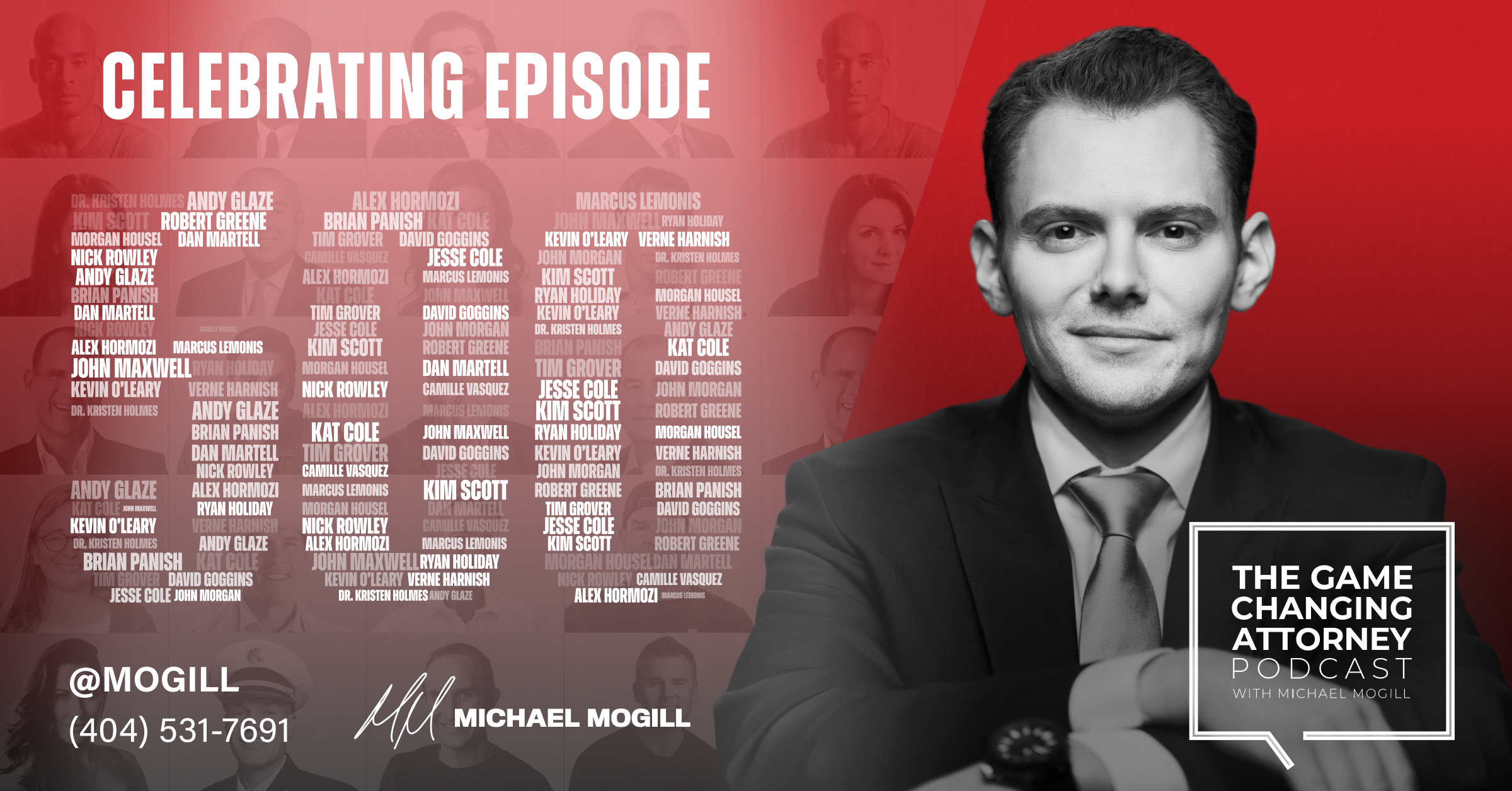
For the full, unfiltered version of this story, check out Episode 438 of The Game Changing Attorney Podcast.